
CBSE Class 12 OSM System: Technician Reveals Shocking Flaws
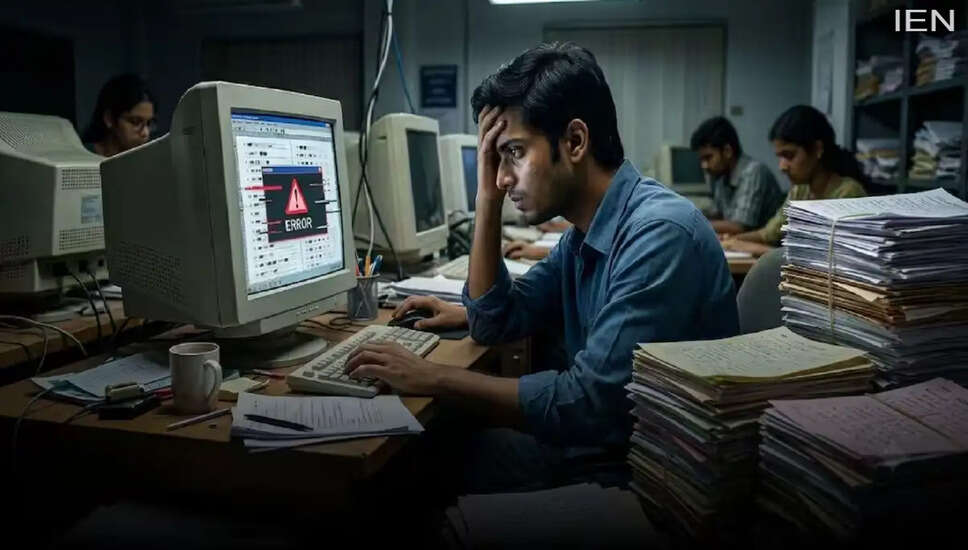
CBSE Class 12 Answer Sheet Evaluation Under Scrutiny
The Central Board of Secondary Education (CBSE) employed the On-Screen Marking (OSM) system for assessing Class 12 answer sheets in the 2026 examinations, a method previously claimed to be infallible. However, a technician involved in the evaluation process has disclosed alarming information that raises serious concerns.
In light of growing doubts about the OSM system used for the Class 12 Board exams, a significant revelation has emerged. A technician, who was responsible for scanning the answer sheets, made shocking statements during a phone call with a reporter from a news media outlet, who posed as a Class 12 student. This conversation has sparked critical inquiries regarding the scanning methodology, software quality, and the overall assessment of the answer sheets.
Concerns About Software and System Quality
The technician criticized the software and hardware used for scanning, labeling them as extremely subpar.
- Basic Software: The system was poorly optimized, with the technician stating that the software was so basic that 'even a child could have created it.' Frequent crashes and lagging were common issues.
- Fear of Data Loss: If a scanned answer sheet failed to upload correctly, all previously captured data would be lost, requiring a complete re-scan.
- Faulty Hardware: The scanning relied on Logitech webcams fixed in place, and many computers had low-performance processors. Despite each answer sheet file being only a few kilobytes, the systems often froze or hung.
Who Conducted the Scanning?
The individuals tasked with uploading the answer sheets were not professionals.
- Freelancers and Students: Most of those scanning the sheets were part-time undergraduate students studying fields like AI, BCA, B.Tech, or B.Com. A technician noted, 'We are only required to scan; we certainly aren't supposed to read the answer sheets.'
- Low Pay and Long Hours: Technicians earned only ₹2 per answer sheet, with payments still pending. Shifts lasted from 9:00 AM to 6:00 PM, followed by another from 8:00 PM to 11:00 PM, with no days off. An individual could scan up to 700 answer sheets daily by working overtime.
Backlog and Concerns Over Missing Sheets
- Growing Backlog: The technician reported a constant backlog due to the influx of answer sheets, expressing concern that some sheets might never reach the scanning stage.
- Pending Bundles: Each bundle typically contained 60 to 100 answer sheets. If one sheet had an issue, the entire bundle was marked as 'pending' and sent for manual checks.
- Post-Exam Operations: Operations continued until April 12, even after exams ended on April 10. One center received about 35,000 answer sheets, with 10,000 ending up in backlog.
Quality Control Negligence
Due to lapses in quality control, many blurred or illegible answer sheets were mistakenly sent for evaluation. Technical issues caused numerous sheets to be automatically rejected, preventing them from moving to the evaluation stage. Scanning a batch took around 15 minutes, followed by quality checks.
Lack of Oversight and Security
The technician claimed there was no police presence or official oversight at the scanning center.
- Absence of Officials: No police or CBSE representatives inspected the center. CCTV cameras monitored the premises, and access was limited to authorized personnel. After scanning, answer sheets were sent directly to CBSE via a server for evaluation.
- Use of Smaller Centers: Small villages and government colleges near Tier-1 cities were designated as scanning centers, with the executing company's identity remaining undisclosed.
These revelations cast significant doubt on CBSE's claims regarding the transparency and uniformity of the OSM evaluation process.