
JNU Implements 5% Supernumerary Quota for Staff Children in Academic Programs
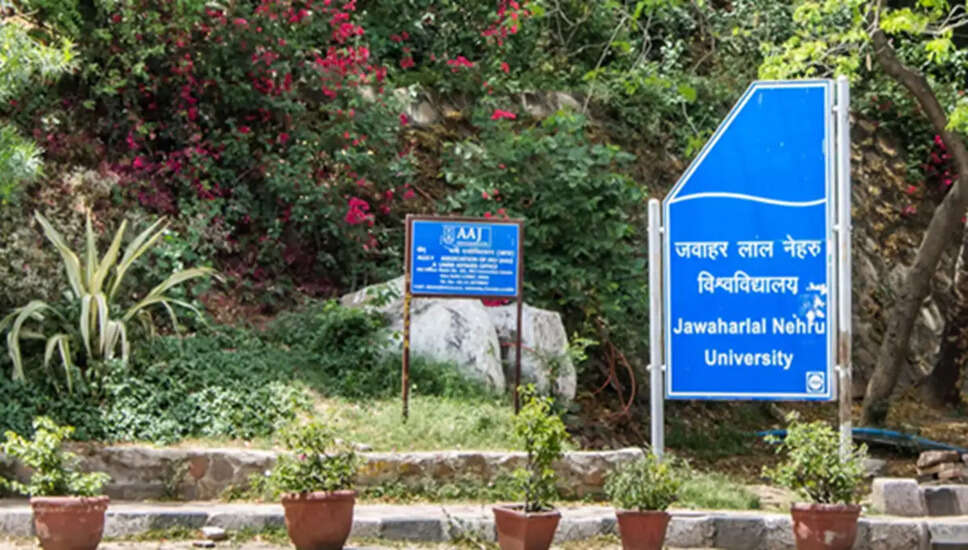
JNU's New Quota Policy for Staff Children
Jawaharlal Nehru University (JNU) has made a pivotal decision concerning the children of its teaching and non-teaching personnel, set to take effect in the next academic year. The institution has sanctioned a 5% supernumerary quota for additional seats in all undergraduate (UG) and postgraduate (PG) programs.
This initiative was approved during the Executive Council meeting on April 15. Previously, JNU had a supernumerary quota of less than 1% for the children of regular staff members (Groups B, C, and D). The new policy not only raises this quota to 5% but also extends it to the children of teaching staff.
For an extended period, JNU's teaching and non-teaching staff had been advocating for an increase in the quota for their children, citing that many other central universities across India offer quotas ranging from 5% to 15% for their employees' children.
Details of the New Quota
**Reservation for New Seats**
The university administration has assured that this new quota will not affect the current seat allocation. Instead, it will be implemented by creating additional seats, ensuring that the existing seat matrix remains unchanged.
A university official stated, "This 5% supernumerary quota will be effective from the upcoming academic year and will apply to all UG and PG courses. Importantly, these seats will be created separately from the existing ones, ensuring no negative impact on general category seats."
Benefits for Children of Deceased Employees
**Quota for Children of Deceased Employees**
Prior to this decision, a committee was formed by the Competent Authority to review the matter. The committee thoroughly discussed the issue and recommended a 5% supernumerary quota for the children of regular JNU employees, both teaching and non-teaching. Additionally, it suggested extending this benefit to the children of employees who passed away during their service. The committee's recommendations were approved by the Academic Council and subsequently accepted by the Executive Council, leading to the implementation of this quota from the current academic year. Admissions for UG and PG courses at JNU are conducted through CUET-UG and CUET-PG, respectively.
However, candidates applying under the staff quota must meet the minimum eligibility criteria and qualify in the national-level entrance examinations. An official mentioned, "Admission for all candidates in this category will be based entirely on the prescribed eligibility criteria and their performance in the national-level entrance examinations."
Similar Quota Policies in Other Universities
**Other Universities with Quota Policies**
Numerous central universities and higher education institutions across the nation have already established similar provisions for the children of their employees. For example, such policies are in place at Delhi University and Banaras Hindu University, although the scope and percentage of these quotas may differ among institutions.
This decision is anticipated to provide relief to JNU employees, especially those families who have long sought this facility.